


Medically reviewed by Dr. L. Bharath , Consultant Orthopaedic Surgeon, Bharath Orthopaedics
Not every bone, joint, or muscle problem needs an operation. In fact, many orthopaedic conditions get better with the right non-surgical treatments in Chennai, whether that is physiotherapy, medication, injections, or simply time and rest done the right way. For many orthopaedic conditions, non-surgical treatment is considered before surgery when clinically appropriate, though some injuries and structural problems do need early surgical care.
This page explains the main non-surgical treatments used in orthopaedic care, when they help, and when surgery may still be needed. It is written and reviewed by Dr. Bharath Loganathan, an orthopaedic surgeon at Bharath Orthopaedics, where he practises as Senior Joint Replacement Surgeon at Dr. Soundarapandian Bone and Joint Hospital, with over 20 years of clinical experience in Chennai.
What is Non-Surgical Orthopaedics?
Non-surgical orthopaedics, sometimes called non-operative orthopaedic care, focuses on treating pain and improving movement without an operation. An orthopaedic doctor will usually start here, using conservative treatment, and only move toward surgery if the condition does not improve or is too advanced for it to help.
These treatments are commonly used for conditions such as:
- Arthritis
- Back pain
- Sports injuries
- Soft tissue injuries, including ligament or tendon damage
- Many low-risk stress fractures of the shin
- Carpal tunnel syndrome
- Bursitis and tendinitis
When Conservative Care is Not Appropriate
While non-surgical treatment resolves most musculoskeletal conditions, certain symptoms need immediate orthopaedic evaluation rather than a wait-and-see approach. Seek urgent medical attention if you notice:
- Rapidly progressive weakness, such as a sudden foot drop or a sudden loss of strength in your hand or leg
- Loss of bowel or bladder control, or sudden difficulty passing urine, along with severe back pain, which can be a sign of a serious spinal condition called cauda equina syndrome
- A joint that feels unstable or that you cannot bear weight on, which can point to significant structural damage
- Signs of infection, such as fever, along with warm, red swelling around a joint and pain that persists even at rest
If you notice any of these, please go to an emergency room or contact an orthopaedic specialist immediately rather than starting conservative care on your own.
Why Patients Choose Non-Surgical Treatment First
Many patients prefer to try non-surgical options before considering an operation, and for good reason. These treatments generally carry fewer risks than surgery and often need less downtime, though recovery time still varies a great deal depending on the condition. For arthritis, sports injuries, and early stage joint problems in particular, non-surgical care can provide meaningful symptom relief and improve function, sometimes without ever needing surgery.
That said, non-surgical treatments are not entirely risk free. Injections carry a small risk of infection at the injection site, and medications need to be used under medical guidance rather than self-prescribed, especially with repeated use over time. Your doctor will help you weigh these factors against your specific condition.
Common Non-Surgical Treatments
Physical Therapy
Physical therapy is often the foundation of non-surgical care. A physiotherapist builds a programme of exercises, stretches, and hands-on techniques suited to your injury, helping restore strength, flexibility, and movement. It works especially well for sports injuries and for recovery after a fracture has healed.
Medications
Anti-inflammatory medications, such as ibuprofen or naproxen, help reduce pain and swelling. For more severe inflammation, such as in arthritis flare ups, your doctor may recommend stronger medication, or in some cases a corticosteroid injection directly into the joint rather than an oral course. These should always be taken exactly as prescribed, since overuse of pain medication and repeated corticosteroid use can carry their own risks over time.
Orthotic Devices
Braces, splints, shoe inserts, and supportive footwear help stabilise a joint and ease pain during daily movement. These are commonly used for conditions like plantar fasciitis, ankle sprains, and tendon pain, also known as tendinopathy.
Injections
Several types of injections are used depending on the condition:
- Cortisone injections can offer relatively fast reduction in inflammation and pain, though how quickly and how long this lasts varies by patient and condition, and frequent use is generally avoided
- Viscosupplementation injections, using hyaluronic acid, are sometimes used for knee arthritis to support joint movement, though the evidence on how effective they are is mixed and this is decided on a case by case basis
- Platelet-Rich Plasma, or PRP, therapy uses a concentrate from your own blood, with evidence for its benefit varying depending on the specific condition being treated
Regenerative Treatments
PRP therapy has evidence supporting its use for some conditions, particularly mild to moderate osteoarthritis and certain tendon injuries, though the strength of that evidence varies by condition, how the PRP is prepared, and what outcome is being measured. Stem cell therapy for orthopaedic conditions is still largely considered experimental, and its status varies by the specific therapy and the condition it is being used for, so this option should be discussed carefully with your doctor before you decide whether it is right for you.
Shockwave Therapy
This treatment uses focused sound waves and is used clinically for certain stubborn conditions like plantar fasciitis or tennis elbow, where other treatments have not fully resolved the pain. Exactly how it works at a biological level is still being studied, but it remains a useful option for select tendon conditions.
Immobilisation
Casts, splints, or slings hold an injured area still so it can heal. Many low-risk stress fractures of the shin, for example, heal well with rest and immobilisation, though some fractures, depending on their exact location and risk level, need stricter offloading or even surgery, so this is always assessed individually.
Lifestyle Adjustments
Weight management, posture correction, and simple changes to how you move or sit at work can reduce ongoing strain on joints and lower the risk of the same injury happening again, though they cannot guarantee it will not.
When Non-Surgical Care is Not Enough
Non-surgical treatment works well for many patients, but not all. If your pain keeps returning, if imaging shows the joint or bone damage is advanced, or if conservative care has been tried for a reasonable period without real improvement, your doctor may recommend moving toward a surgical option, such as knee joint replacement or arthroscopy. This is always a considered next step, not an automatic one, and you will be part of that decision.
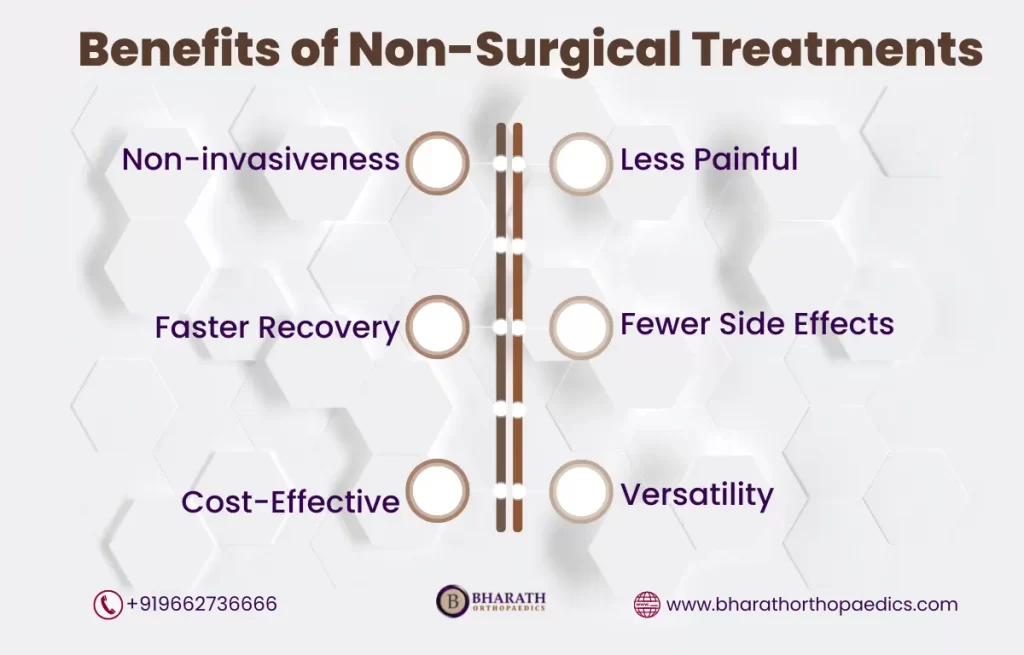
How Non-Surgical and Surgical Care Compare
| Non-Surgical Treatment | Surgical Treatment | |
|---|---|---|
| Invasiveness | Minimal or none | Significant |
| Recovery time | Varies widely, from days to several months depending on the condition | Several weeks to months |
| Cost | Often more affordable, though repeated injections, imaging, or extended physiotherapy can add up | Generally higher, but a single defined cost |
| Risks | Lower, though not zero | Higher, including infection and anaesthesia related risks |
| Best suited for | Early stage, moderate, or select advanced conditions where surgery is not needed or not suitable | Advanced or severe damage where non-surgical care is not enough |
| Examples | Physiotherapy, bracing, injections, PRP | Knee replacement, spine surgery, arthroscopy |
Preventing Future Joint and Bone Problems
Good daily habits go a long way in preventing the conditions that non-surgical treatment is used for.
Stay active with low impact exercise. Swimming, cycling, yoga, or a daily walk keep muscles strong and joints moving without added strain. This is especially helpful for older adults and anyone recovering from a past injury.
Eat for bone and joint health. Calcium from milk, yogurt, and leafy greens, along with vitamin D from sunlight or fortified foods, supports bone strength. Protein from eggs, fish, beans, and nuts helps repair muscle and tissue.
Maintain a healthy weight. Extra weight increases the mechanical load on weight-bearing joints like the knees, hips, and spine, and is associated with a higher risk of osteoarthritis over time. Even a modest reduction in weight can meaningfully ease joint pain.
Set up your workspace correctly. Long hours of sitting with poor posture can contribute to neck, shoulder, and lower back discomfort, though posture is rarely the only cause. Keeping your screen at eye level, using a supportive chair, and taking short breaks to stretch through the day are simple habits that can help.
Get Non-Surgical Orthopaedic Care in Chennai
If pain or stiffness is affecting your daily life, the first step is a proper evaluation, not an assumption that surgery is your only option. Dr. Bharath Loganathan and his team will assess your condition and recommend the most appropriate treatment path for you.
Book an appointment: Contact us or call +91 96627 36666
Read also Knee Procedures in Chennai.